This comprehensive review examines policies and initiatives for promoting sustainable wood use across the United States and selected European countries (France, Germany, Switzerland, and the United Kingdom). The page analyses how both public sector policies and private sector campaigns drive wood market development, with lessons applicable to diverse national contexts.
- Definitions and Key Distinctions
- Forest Resources and Industry Context
- Public Sector Policy Framework
- Key EU Policies Supporting Wood Promotion
- United States Wood Promotion
- European Wood Promotion
- Factors Contributing to Successful Promotion
- Get the Policy Environment Right
- Ensure Promotion is Aligned with Supply
- Build Resilient Networks
- Resolve Differences and Identify Common Ground
- Ensure Strong Public-Private Partnership
- Leverage Independent Forest Certification
- Provide Public Support for Science and Innovation
- Generate Funds for Promotion Through Industry Levies
- Leverage Climate Change Concern
- Back Claims with Science
- Actively Engage in Standards Setting
- Know Your Market
- Focus on Education and Training
- Identify and Inspire Influencers
- Invest in Social Media
- Key Observations
- Conclusion
Definitions and Key Distinctions
The report takes a broad view of “sustainable wood promotion” policies by the public sector, focusing on initiatives that create favorable market conditions for wood products—particularly those linked to climate change mitigation, circular economy principles, and environmentally preferable outcomes.
In contrast, the report adopts a narrow view of public procurement policies that restrict wood purchases to specific certified products. While often labeled as “promotion,” such policies may actually constrain rather than expand sustainable wood markets if they impose barriers inequitably on certain suppliers, particularly smallholders.
Forest Resources and Industry Context
United States Overview
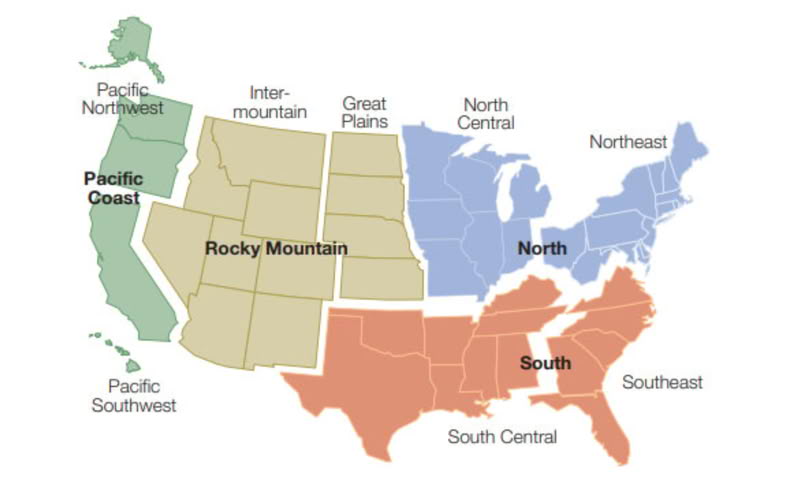
Forest Area and Ownership: The USA encompasses 300 million hectares of forests and woodlands, with 67% designated as timberland. Notably, 58% is privately owned, including approximately 10.6 million families controlling 38% of all forest and woodland. This high proportion of family forest ownership distinguishes the US regulatory model from most European countries.
Forest Condition: While total forest volume has expanded, particularly in the Eastern states, the nation faces mounting pressures from wildfire, pests, disease, and climate change. Tree removal occurs on less than 2% of forest land annually, well below the 3% disturbed by natural events.
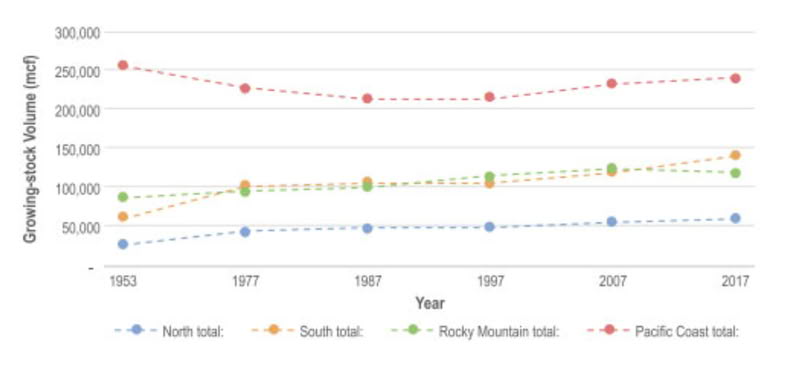
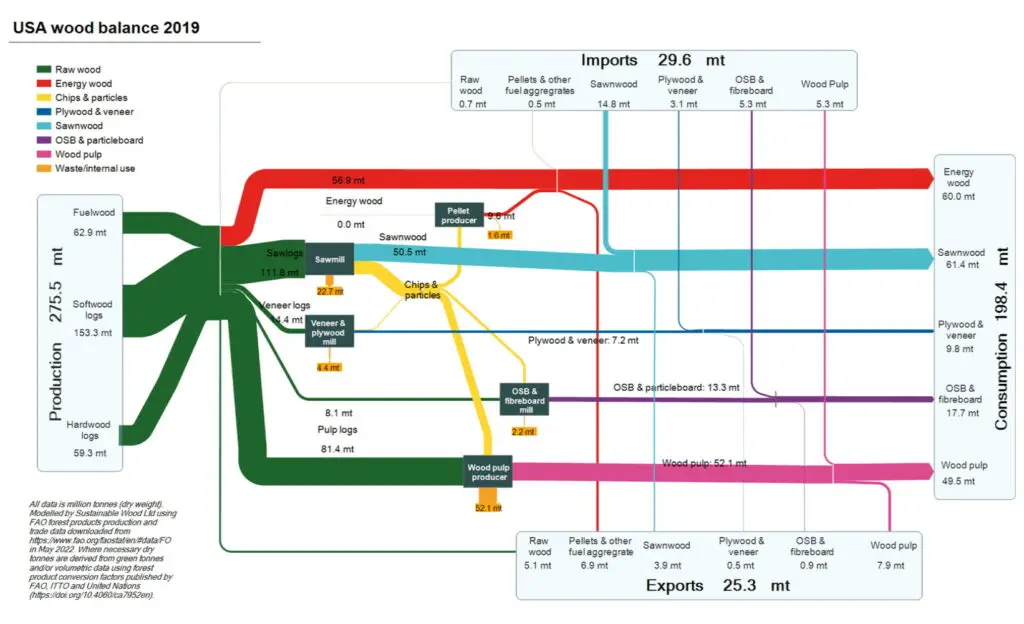
Wood Supply and Demand: In 2019, the US produced 275 million tonnes of wood fibre (including all industrial roundwood and firewood), with total imports of approximately 30 million tonnes. Per capita consumption stands at over 1 cubic meter annually, more than double the global average.
European Forests
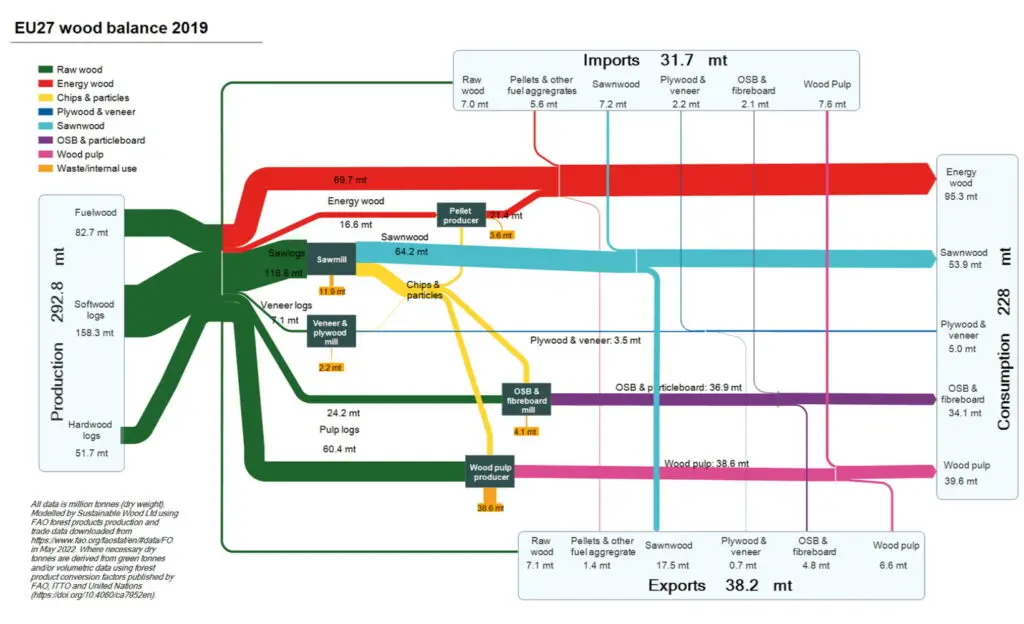
Coverage and Expansion: European forests now occupy 227 million hectares (over one-third of the continent’s land surface), having expanded by 9% over the last 30 years. The EU27 alone holds approximately 180 million hectares.
Carbon Sequestration: Forests sequester approximately one-tenth of European CO2 emissions annually through biomass growth and carbon storage. About three-quarters of net annual wood increment are harvested, creating opportunities for sustained wood production.
Forest Diversity and Threats: While forest area has expanded, tree species diversity remains limited, with only 5% of EU forests containing six or more tree species. Recent decades have seen growing frequency of large-scale disturbances—extreme droughts, bark beetle outbreaks, and forest fires—partly reflecting climate change impacts.
Public Sector Policy Framework
United States Forest Governance
Federal Authority: The U.S. Forest Service manages approximately 35% of reserved forest land through a system of National Forests established beginning in 1891. The Multiple Use and Sustained Yield Act (1960) requires that harvest volumes cannot exceed growth, with mandatory replanting.
Private Land Stewardship: Given the dominance of private ownership, the federal government developed far-reaching public-private partnerships to enhance forest management. The Forest Stewardship Program, authorized by the 1990 Farm Bill, has provided 350,000+ comprehensive management plans covering over 16 million hectares and created a nationwide network of forestry technical assistance providers.
State-Level Implementation: The 2008 Farm Bill mandated that all states develop State-wide Assessments and Strategies for Forest Resources, providing long-term investment plans and engaging multiple stakeholders. Federal funds support implementation of state strategies through competitive project selection aligned with state-identified objectives.
Private Sector Certification: The American Tree Farm System (ATFS), established in 1941, and the Sustainable Forestry Initiative (SFI), launched in 1996, now encompass approximately 34.2 million hectares—roughly 10% of global PEFC certified forests.
EU and European National Frameworks
EU Forest Strategy 2030: Adopted in July 2021, the strategy explicitly links sustainable forest product markets to achieving the EU’s biodiversity and climate objectives (55% emission reduction by 2030, climate neutrality by 2050). The strategy recognises the multifunctional role of forests and the contribution of the forest-based value chain to achieving climate neutrality while preserving rural prosperity.
FOREST EUROPE: This Pan-European voluntary policy process (46 signatories) has developed internationally recognised guidelines for sustainable forest management based on agreed criteria and indicators. Ministers meet every four to five years to endorse updated declarations and resolutions.
National Forest Programs: European countries, particularly in the East and Southeast, maintain stronger state ownership of forests (up to 90%) compared to Western Europe, where private ownership dominates (~70%). Each nation has developed legally binding forest laws emphasising sustainable management principles, though the extent of owner freedom in management decisions varies significantly across the region.
Key EU Policies Supporting Wood Promotion
European Green Deal and Forest Strategy
The European Green Deal (2020) recognizes forests as under increasing pressure and commits to improving quality and quantity of EU forested area. The associated EU Forest Strategy for 2030 explicitly aims to contribute to biodiversity objectives and climate goals through increased forest quantity and quality, enhanced carbon sequestration, old growth forest protection, and encouragement of the bio-economy.
EU Biodiversity Strategy 2030
The strategy commits to strictly protect all primary and old-growth forests (currently only 2–4% of EU forests) and to plant three billion additional trees by 2030 according to ecological principles. It also aims to increase health and resilience of EU forests against climate-driven threats and to shift bioenergy toward advanced biofuels based on residues rather than whole trees.
EU Bio-Economy Strategy
Recognizing forests as key components of the circular economy, the EU strategy (updated 2018–2021) has more than doubled funding for bio-economy research under the Framework Programme, from €1.9 billion to €4.52 billion. The Bio-Based Industries Joint Undertaking has leveraged €1 billion in EU investment to mobilize €2.7 billion in private investment.
A €100 million Circular Bio-economy Thematic Investment Platform supports bringing bio-based innovations to market, while policy support facilities help Member States develop their own bio-economy strategies.
New European Bauhaus
This creative interdisciplinary initiative explicitly seeks to dissolve boundaries between art, artisanry, and industry to encourage experimentation with sustainable design and construction. The initiative recommends that Horizon Europe research funding (€95.5 billion for 2021–2027) should support demonstrative and educational work alongside fundamental research, with significant emphasis on efficient and widespread utilization of sustainable wood products.
FLEGT Action Plan
Since 2003, the Forest Law Enforcement, Governance and Trade (FLEGT) Action Plan has implemented €935 million in investments (2003–2014) to tackle illegal logging. It established Voluntary Partnership Agreements (VPAs) defining “legal timber” and introducing FLEGT licensing to guarantee that exported timber is legal. Only Indonesia has reached full FLEGT licensing stage, though implementation is working well there.
In November 2021, the EU proposed extending the framework to include beef, coffee, palm, and soy alongside timber, with prohibition of products from deforested land (regardless of legality) after December 31, 2020.
United States Wood Promotion
Federal Initiatives
Wood Innovations Program
The USDA Forest Service Wood Innovations Program (WIP), established through the 2018 Farm Bill, aims to “expand and create markets for wood products and wood energy that support long-term, sustainable management of National Forest System lands and other forest lands.”
Budget and Focus: With approximately $11 million in grants annually (around 50 awards in fiscal 2021), the WIP prioritizes:
- Mass timber in construction
- Renewable wood energy infrastructure expansion
- Retooling economically challenged sawmills
Key emphasis remains on reducing wildfire risk by retaining markets for excess biomass and low-value logs removed during forest management.
Green Building Rating Systems
Federal procurement initially relied heavily on LEED (Leadership in Energy and Environmental Design), which once restricted wood credits to FSC-certified products. This created controversy given that SFI and ATFS certifications cover far larger forest areas in the US.
Positive Evolution: Recent improvements include:
- Alternative Pathway Credits expanding recognition to PEFC, SFI, and ATFS
- Whole Building LCA credits (LEED v4.1) based on demonstrated reduction in Global Warming Potential
- Green Globes recognition alongside LEED, with a Performance Path based entirely on LCA data and recognition of SFI, ATFS, and PEFC alongside FSC
Biopreferred Program
Managed by USDA, the Biopreferred Program promotes bio-based products to reduce reliance on petroleum and increase renewable agricultural resource use. Initially excluding forest products through “mature market” restrictions, the program was amended in 2014 to include forest products demonstrating “innovative approaches” in growing, harvesting, sourcing, processing, manufacturing, or application.
Current Coverage: USDA has identified 139 product categories for mandatory federal procurement of bio-based products, including “Lumber, Millwork, and Underlayments”; “Flooring Coverings”; and “Engineered Products for Structural Construction.” The USDA Certified Biobased Product label provides third-party verification of renewable biological ingredients, with participation now including companies from over 40 countries.
Key Feature: The program’s chemical-signature-based assessment requires no demonstration of actual forest regeneration—a simplistic but effective approach treating all forest and farm-based products as environmentally superior to fossil-based alternatives.
National Association of State Foresters
NASF, established in 1920, serves as the leading authority on US forest management and includes directors of forestry agencies from all 50 states and territories. The organization:
- Advocates for federal legislation promoting forest health, resilience, and productivity
- Coordinates regional state forester organizations addressing national issues
- Maintains high-profile website with State Forest Action Plans and Wildlife Action Plans (mandated for 10-year updates)
- Produces short films, press releases, blog posts, and testimony on forest policy
Private Sector Campaigns
Softwood Lumber Board (SLB)
Established in 2011 through a mandatory Checkoff program (levy of $0.41 per 1000 board feet), the SLB represents a **highly coordinated national initiative** with an **annual budget of $15–18 million**. An industry referendum in 2018 showed 78% approval (representing 94% of sales volume).
Core Programs:
- Think Wood: Targets architects, engineers, developers, and contractors in single-family, multi-family, and commercial construction. Advances softwood benefits across value/ROI, design potential, build performance, and sustainability.
- WoodWorks: Reaches design/build professionals with information on business case for wood, sustainability, US forest economy value, and building codes. Provides free one-on-one project assistance, continuing education, design tools, and technical support.
Educational Component: The Wood Institute offers 160+ on-demand courses for architects, engineers, and code officials, approved for professional credit. Last year delivered 6,500 learning hours.
Carbon Initiative: A Mass Timber Competition (in association with USDA) offers $2 million in prizes for “net-zero carbon” construction projects that are “repeatable and scalable,” showcasing mass/engineered timber’s role in decarbonization.
Real American Hardwood Coalition
Launched in 2019 by 30 industry associations, the RAHC emerged in response to US-China trade disputes, declining domestic hardwood markets, and competing wood-look non-wood products. Funded through voluntary contributions (goal of $750,000–$1.2 million annually), the Coalition:
- Conducted in-depth market research with over 1,000 participants (homeowners, renovators, architects, designers, builders)
- Developed logo, core messaging, and industry-focused website
- Commissioned consumer-facing website (launched Spring 2022) focusing on timber’s appearance, durability, style, and emotional attachment
- Plans social media influencer engagement and retail presence expansion
Messaging Focus: Research revealed home health benefits (natural, low chemicals, allergen-resistant) resonated more strongly than abstract “sustainability” concepts.
European Wood Promotion
Region-Wide Initiatives
Wood4Bauhaus
Launched April 2021, this alliance of umbrella organizations (CEI-Bois, EPF, EOS) alongside InnovaWood and EFBWW, aims to:
- Foster long-term dialogue on New European Bauhaus applications
- Raise awareness of the circular economy’s transformative power
- Highlight versatility of innovative wood products
- Facilitate co-creation partnerships for sustainable building
Support Base: Linked to Horizon Europe project consortia (BASAJAUN, WoodCircus) and various European-funded research initiatives. The alliance aims to grow as a major hub for New European Bauhaus, connecting wood sector stakeholders with design innovation and climate objectives.
France: Model of Integrated Support
Institutional Framework
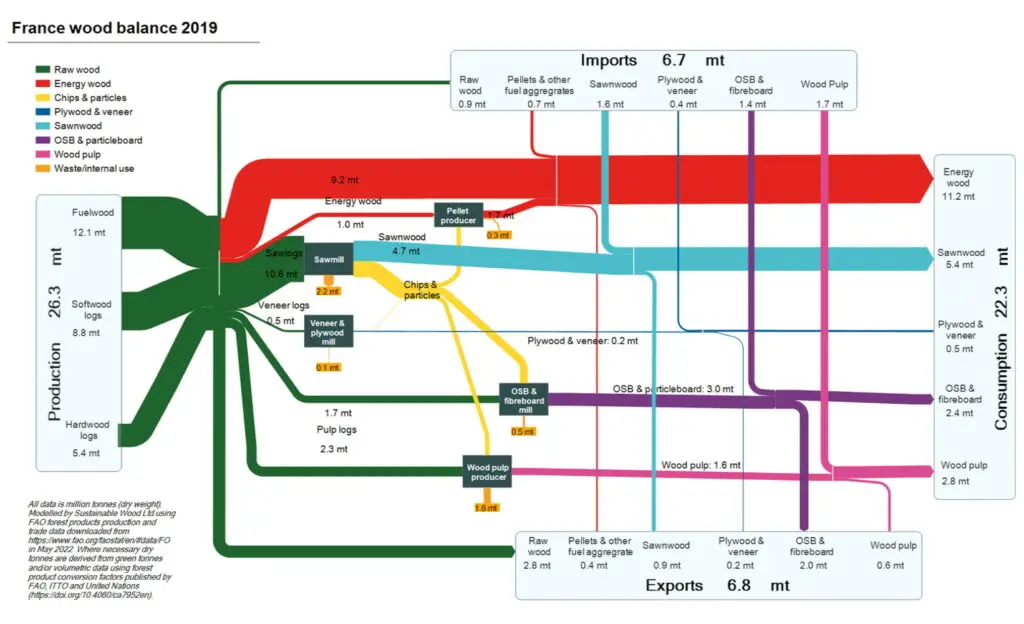
France exemplifies strongest institutional frameworks for wood promotion globally. The government established CODIFAB (Professional Committee for French Furniture and Wood Industries Development), a mandatory industry levy structure empowered by French Finance Act.
Funding Mechanism: All furniture and wood product manufacturers and importers pay a mandatory levy (0.18% for furniture, 0.09% for wood products on turnover). CODIFAB collects revenue and Customs enforces collection on third-country imports. 2021 budget reached €16.57 million, allocated across:
- 20% promotion and communication
- 11% innovation and design
- 40% technical and research
- 4% training
- 11% international development
Public Policy Support
Regulatory Incentives: France introduced three regulatory measures (2009–2011) to boost wood use in construction:
- External wood cladding made exempt from building permits
- Minimum wood use threshold in new houses (except where incompatible with safety)
- Permit approval for renewable materials including timber
RE2020 Environmental Regulation (2020): Required 50% of materials in public buildings to be bio-based, including timber, with full implementation by 2022.
Financial Support: The Wood Industry Strategic Fund (Le Fonds Bois), established 2009 with initial €20 million, continues as an equity/quasi-equity investment fund supporting wood and eco-materials companies with €5–10 million interventions for firms exceeding €5 million annual turnover.
Major Campaigns
Pour moi, c’est le bois (2017–2020): A €10 million, three-year national campaign described as “one of most extensive and wide-reaching wood promotional campaigns ever seen in Europe.”
Media Reach: The campaign deployed:
- 1,440 TV ads → 119 million views
- 230 radio spots → 58.2 million listens
- 45-second cinema ads with Asterix → 3 million people
- 100 print media insertions + online videos → 4.6 million hits
- 319 spots during La Maison France 5 → 3 million viewers per show (30 weeks)
Adibois (Timber Building Association): Emerged from the Nouvelle France Industrielle program (2015) with €8 million budget (€5.8 million from national development bank BPI). Focused on demonstrating multi-residential and multi-storey wood projects as “exemplar buildings” showcasing modern timber-based construction. Initial 13 projects led to regional government adoption of wood-building-friendly policies.
France Bois 2024: Special initiative leveraging Paris Olympics (2024) to showcase timber construction. 50% of athletes’ village buildings will be timber-based, with timber designated as principal material for judo/wrestling arena and aquatics centre. Target of 100,000 m³ timber use, with goal to source 50% domestically. Developed “France Bois Traceability” blockchain tool to simplify multi-certification audit requirements.
Germany: Charter for Wood 2.0
Coordinated Government-Industry Framework
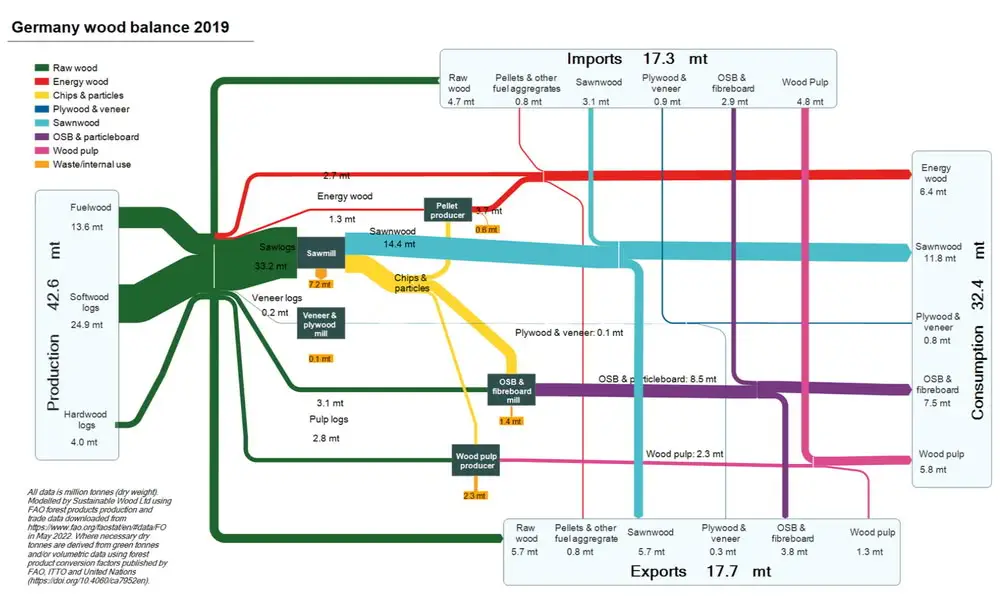
Germany’s Charter for Wood 2.0 (November 2016) signalled renewed commitment to wood as part of the Climate Action Plan 2050. Agricultural ministers of Federal Government and all federal states (Länder) agreed that “sustainable forest management, sustainable wood use, and using wood as substitute for energy-intensive materials with harmful CO2 impact can significantly contribute to greenhouse gas emission reduction.”
Implementation Structure: The Charter operates through six thematic working groups (guided by steering committee) in:
- Increasing wood mobilization and utilization
- Construction and wood building applications
- Supporting research, innovation, and technology transfer
- Education and training
- Public awareness and communication
- Promoting regional wood supply chains
Website and Evaluation: A dedicated Charter website explains rationale, provides action recommendations, shares news on projects, publishes case studies on innovative wood use, and offers annual scientific evaluations by Thuenen Institute to assess outcomes and enable continuous improvement.
National Forest Strategy 2050
Updated in 2020, the strategy acknowledges that 2.6 billion tons of carbon are currently bound in German forest biomass, dead wood, and soil, with annual sequestration of 57 million tonnes CO2 and 4.2 million tonnes CO2 in harvested wood products. The document notes that holistic assessment of forest carbon storage effects combined with material substitution has improved greenhouse gas balance by 14%, equivalent to 80% of 2016 road traffic emissions.
Forest Climate Fund
Established 2013 with €35 million annual funding, the fund supports measures to maintain and increase forest contribution to climate change mitigation. Priority areas include:
- Forest management adapting forests to climate change impacts
- Expansion of forests and afforestation
- Mobilization of forest biomass for energy and material use
- Research and development on forest climate connections
Since 2013, approximately 198 projects have been approved with total funding of €65.61 million (below initial target), with administration transferred to the Agency for Renewable Resources (FNR) in 2019.
Switzerland: Integrated Forest-Wood Policy
Wood Resource Policy Framework
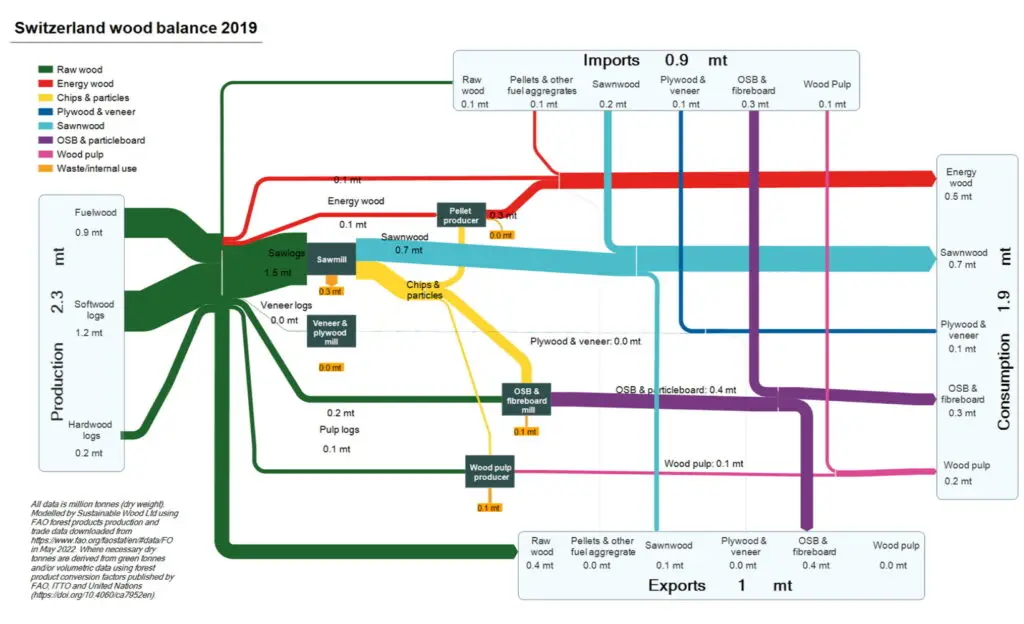
Switzerland demonstrates exceptional coordination of government policy on forests, material procurement, housing, energy, and climate. The Wood Resource Policy (WRP) to 2030, mandated under revised Forest Act (SR 921), explicitly commits the Confederation to “promote the sale and use of sustainably produced wood, particularly through support of innovative projects.”
Financial Commitment: CHF 4 million annually (approximately USD 4.2 million) since 2010, with mandatory 50% cost-sharing from implementing partners.
Action Plan Priorities: Three 2017–2020 priority measures were:
- Optimized cascade use of wood
- Climate-appropriate building and refurbishment
- Communication, knowledge transfer, and cooperation to increase private client demand and architect/engineer understanding
Funding for Forest and Timber Research
The Foundation for the Promotion of Forest and Timber Research (WHFF) has supported applied forestry and wood research since 1946, with CHF 770,000 annually (Federal funding: CHF 470,000; Canton contributions: CHF 300,000).
National Research Program 66 (2011–2017) allocated CHF 18 million for “Strategies and Technologies for Optimized Wood Resource Use,” creating two new professorships at University of Basel and ETH Zurich. Final report documented intensive knowledge transfer with over 200 external professionals, three start-ups formed, and numerous collaborations continued.
CO2 Act and Carbon Accounting
Switzerland’s Federal CO2 Act (1999, progressively revised) requires 20% emission reductions by 2020 and 1.5% annually thereafter (vs. 1990 baseline). A CHF 60 per tonne CO2 tax (since 2008) exempts biofuels including energy wood, creating indirect incentive for wood energy.
Harvested Wood Products Accounting: Since 2012, HWP now count toward Swiss carbon accounts, encouraging government support for measures to increase carbon storage in domestic forests and wood. This framework has motivated federal support for sustainable wood market development.
Lignum Campaign
Switzerland’s unified national wood promotion campaign brings together 16 forest/timber associations, 34 regional cantonal working groups, 3,900 individual members, and 450 company members.
Activities Include:
- Quarterly bilingual bulletin (Holzbulletin/Bulletin Bois) for building professionals
- Technical committee participation ensuring wood properties receive appropriate recognition
- Political lobbying at national and international levels
- Technical documentation and courses
- Wood Awards (every 3 years) for wooden architecture
Woodvetia Campaign: Recent emotional marketing initiative featuring 20 life-size wooden statues of famous Swiss personalities carved from different Swiss wood species, accompanied by broad media/social media campaign building connection between Swiss wood and Swiss identity.
Swiss Origin Label (HSH): Managed by Lignum since September 2011, the label marks wood from Swiss forests managed under strict sustainability requirements. Products may contain up to 20% foreign wood from comparable regions supported by sustainability certification. The label guarantees traceability from forest to end user.
United Kingdom: Emerging Focus
Grown in Britain (GiB)
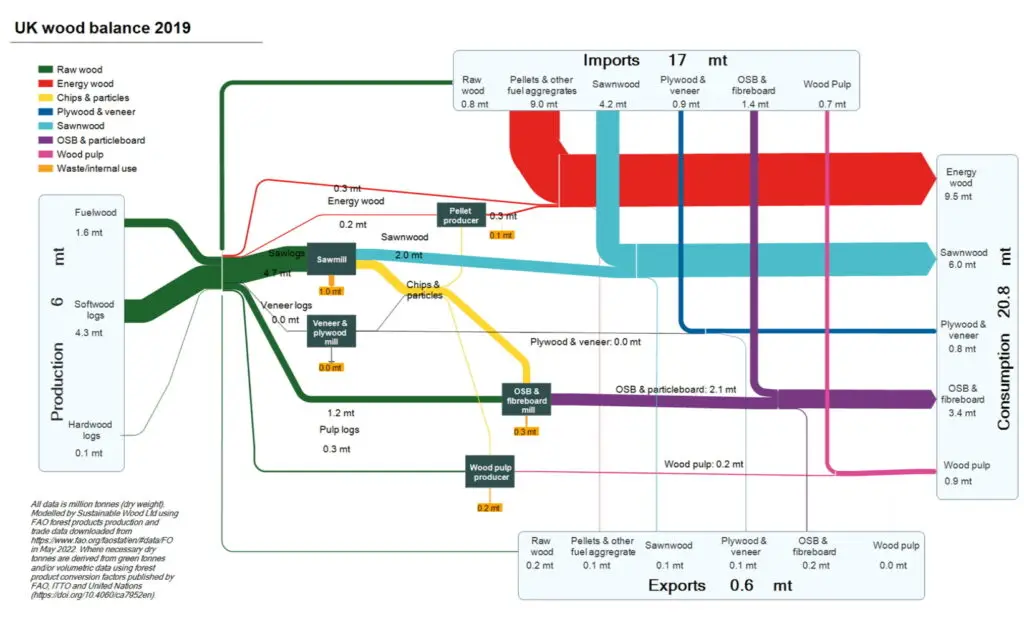
Launched 2013 following concern about privatisation of Public Forest Estate, GiB certifies products from forests actively managed per UK Forestry Standard (UKFS). The standard applies to all UK woodland and requires compliance with forest planning, stakeholder consultation, and restocking conditions.
Recognition: GiB certification is explicitly recognised by UK Government Timber Procurement Policy as compliant with legal and sustainable timber criteria, equivalent to FSC or PEFC certification.
Scope and Impact: GiB now certifies 300,000 hectares annually and 14% of all forest products sold in UK. R&D programs include assessment of sweet chestnut for structural insulated panels, ash for tool handles, and thermal modification of British hardwood.
Messaging: GiB emphasizes:
- Creation of new woodland and bringing forests into active management
- Strategic approaches ensuring benefits for all stakeholders
- “Buy local” reduces timber miles and carbon emissions
- Support for net-zero economy
Wood for Good (WfG)
Operating since 2000 with modest budget (low six figures GBP), WfG campaigns for imported and UK-grown timber. Co-founded by UK Confederation of Forest Industries (Confor) and Swedish Wood, it now includes support from larger businesses, trade bodies, and public sector partners.
Messaging Evolution: While addressing technical performance and aesthetics, WfG has consistently focused on low carbon and environmental benefits, particularly in construction. Recent emphasis on circular bio-economy and validated mental/physical health benefits of wood.
Communication: Primarily through digital channels (website, newsletters, social media), lead timber trade media, and supporter relay of messaging to their customer bases. Latest project: “Wood CO2ts Less” campaign breaking carbon story into simple facts.
Campaign Impact: 50,000 website visitors and 100 media mentions in first six months of “Wood Costs Less.” Strong peer-to-peer communication through network of timber ambassadors in architecture and engineering.
Timber Development UK (TDUK)
Formed 2021 from merger of Timber Trade Federation and TRADA (Timber Research and Development Association), TDUK represents 1,800 businesses with seven-figure budget, spanning sawmillers to architects.
Strategic Focus: Two principal objectives—“information” and “inspiration”—supported by:
- TDUK Knowledge Library (partnership with Edinburgh Napier University) covering timber design, engineering, construction, and environmental topics
- Central hub on wood design and fire safety (with Swedish Wood and independent experts)
- World of Wood Festival (COP26) publicising timber legality, sustainability assurance, and climate mitigation potential
- University liaison programs supporting curriculum development
- Training for suppliers, specifiers, and end users
- Net-zero roadmap development for UK timber sector
Inspiration Activities: Highly visual case study publications, webinars, designer/architect discussions, and the Wood Awards (now 200+ entries annually), recognised as premier UK building and product design competitions, generating peer affirmation of timber potential and highlighting cutting-edge applications.
Factors Contributing to Successful Promotion
Get the Policy Environment Right
Coherent Framework: Most successful campaigns operate where government has developed integrated frameworks linking domestic forest resources and wood supply to related policy objectives (climate change, biodiversity, rural development, energy, construction). Switzerland exemplifies this approach.
Problematic Context: Promotion struggles where policy consistency is lacking, e.g., UK tough procurement standards for wood without equivalent sourcing requirements for non-wood materials, or where embodied carbon receives no credit in green building systems.
Ensure Promotion is Aligned with Supply
Industry Readiness: Great marketing is wasted if industry cannot deliver or respond quickly. Successful promotion requires:
- Mobilization of wood from smaller non-industrial forest owners through extension and research support
- Research and development to improve processing efficiency and develop new product applications
- Clear understanding by promoters of supply and technical product characteristics and appropriate applications
Build Resilient Networks
Overcoming Fragmentation: While fragmentation is often cited as an obstacle, successful initiatives (Lignum Switzerland, CODIFAB France, state networks in US) demonstrate that this can be overcome through large, resilient networks. Fragmentation can become a strength—vast numbers of engaged individuals constitute major lobbying voice and creativity source.
Key Requirements: Direct government support (financial and legislative) proved important in building networks and overcoming competing private sector interests.
Resolve Differences and Identify Common Ground
Unified Voice: Strong single voices with common messages are far more effective than fragmented efforts. Tension between homegrown and imported wood interests often produces contradictory messaging undermining both sides.
Recognition: Wood sector must recognize that main competitors are non-wood materials, identifying common ground when promoting sustainable wood of all types from all sources. Public sector facilitates this through support for network formation and inclusive, equitable procurement standards.
Ensure Strong Public-Private Partnership
Complementary Strengths: Promotion exclusively by private sector suffers from inconsistency and underinvestment in research for new markets. Exclusively public sector approaches lack genuine insights into products, technical performance, and key markets.
Effective Model: Most successful campaigns forge close linkages between public and private sectors, with government providing grants to private sector or cost-sharing agreements for promotional activities.
Leverage Independent Forest Certification
Trust Building: Independent verification of sustainable forestry at source has proven important for building trust with business clients and consumers, simplifying complex sustainability messaging.
Integration: Certification effectively integrated into regulatory framework, particularly SFI in US, which created state implementation committees engaging in wider sustainability promotion activities.
Equity Imperative: Critically important that certification requirements be equitable across suppliers and not create technical barriers for smallholders. Inequitable requirements may limit rather than expand market access for genuinely sustainable wood.
Provide Public Support for Science and Innovation
Funding Gap: Fragmentation of timber products sector contributes to low capacity for R&D compared to other material sectors (plastics, steel). Funding R&D for developing products from lesser utilised species, lower grades, and small-dimension wood is crucial for market development.
Generate Funds for Promotion Through Industry Levies
Sustainable Funding: Largest campaigns (American Softwood Lumber Board, CODIFAB France) benefited from consistent, continuous funding through mandatory levies. Role for public sector to reach agreement with private sector and establish legislative framework for these mechanisms.
Leverage Climate Change Concern
Unique Opportunity: High political and consumer concern for climate change, manifested in ambitious zero-carbon commitments (particularly Europe), offers unique wood promotion opportunity.
Technical Advantages:
- Focus on energy-efficient construction plays to wood’s thermal insulation qualities
- Embodied carbon accounting (now recognized under UNFCCC HWP procedures) creates major market benefits for wood
- Carbon storage message has strong traction with policymakers, building professionals, and consumers
Back Claims with Science
Transparency: Wood marketing experts emphasise ensuring promotion messages fully supported by independent, unbiased scientific research. Wood has nothing to hide—technical, environmental, and social credentials speak for themselves.
Level Playing Field: Wood benefits more in marketplace by taking high ground on data transparency. Rather than seeking special treatment, wood needs level playing field via scientific life cycle analysis in product environmental standards.
Actively Engage in Standards Setting
Critical Importance: Often-neglected aspect of promotion but increasingly vital to develop applications and expand market share in high-performance sectors (structural) and overcome misconceptions about fire risk, durability, environmental impacts.
Know Your Market
Regular Analysis: Accurate market trend analysis essential for:
- Ensuring messaging and communication channels appropriately target audiences
- Monitoring impact of market development programs
- Identifying opportunities and constraints
Cooperative Monitoring: Most effective when carried out jointly by public and private sector, with government providing statistics and funds and private sector providing regular market insights through surveys and interviews.
Focus on Education and Training
Deep Engagement: Far-reaching efforts to directly engage target audiences in education and training are key feature of nearly all successful campaigns.
Particular Value: Establishing deep knowledge and enthusiasm for forest products in early professional training (architectural and engineering schools) has lasting impact on product demand. Continuous professional development ensures knowledge remains current.
Identify and Inspire Influencers
Multiplier Effect: Identifying and targeting high-profile architects, designers, and business leaders to convey positive wood messages is often far more efficient than traditional marketing channels for reaching large audiences.
Facilitation Methods:
- Annual Awards for wood buildings and furniture
- Annual festivals
- New European Bauhaus exemplifies joint public-private creative wood development partnership
Invest in Social Media
Cost Reduction: Massive social media development creates opportunities for larger consumer campaigns at much lower cost. Acquiring and developing social media skills increasingly essential for promotion campaigns.
Evidence: Some campaigns, notably UK Grown in Britain, now rely almost entirely on social media as principal communication channel.
Key Observations
United States Experience
Strengths:
- Strong underlying cultural attachment to wood products persists despite pressures from non-wood substitutes
- Diverse coalition of stakeholders (federal/state agencies, certification programs, trade associations, academic institutions, independent loggers, forestry professionals) provides solid institutional setting for wood promotion
- Innovation in engineered wood products (CLT, glulam) expanding applications and markets
Weaknesses:
- Until recently, lack of coordinated national hardwood promotion (reflected in Real American Hardwood Coalition’s modest funding vs. Softwood Lumber Board’s $15–18 million annually)
- Historical reliance on LEED monopoly in federal procurement created barriers for non-FSC-certified wood
- Significant market share losses in some sectors (windows, decking, siding) to non-wood substitutes
- Hardwood lumber production peaked 1999 at 12.6 billion board feet; 2021 utilized only 8 billion board feet
European Experience
Strengths:
- Expanding forests store growing volumes of carbon while maintaining 75% harvest utilization
- Advanced green building initiatives (New European Bauhaus, EU Forest Strategy) directly recognize role of sustainable wood products in decarbonization and circular economy
- Country-level campaigns (France, Germany, Switzerland) demonstrate coherent long-term strategies with sustained public-private partnerships
Weaknesses:
- Low market share in construction: Wood represents <3% of EU construction materials (vs. 93% non-metallic minerals), varying from >10% (Finland, Sweden) to <2% in most Member States
- Fragmentation remains obstacle: EU-wide initiatives have had “limited impact” according to European Court of Auditors
- Conflicting policy signals: Strict procurement policies on wood not matched by equivalent sourcing requirements for non-wood alternatives
Framework for Vietnam Application
The review emphasises that Vietnam’s wood promotion strategy must be tailored to its specific circumstances:
- Forest resource availability and degradation status
- Domestic industry structure and capacity
- Market demand and consumer preferences
- Regulatory and institutional capabilities
- International market opportunities and constraints
Rather than copying any single approach, Vietnam should selectively adapt lessons from multiple contexts while building on its own comparative advantages in wood products innovation and export markets.
Conclusion
Successful sustainable wood promotion requires coherent alignment of forest governance, industrial development, regulatory framework, and market communication. No single “best approach” exists; rather, effective strategies must be tailored to national and regional contexts, building on specific forest resources, ownership structures, market conditions, and cultural preferences.
Critical success factors include: supportive policy environment, alignment of promotion with supply capacity, resilient networks overcoming fragmentation, public-private partnerships, science-backed messaging, standards engagement, education and training, influencer identification, and strategic use of social media. Most successful campaigns operate with consistent, modest funding (low seven-figure range)—suggesting that continuity and collective commitment matter more than absolute budget size.
Source: Policies and initiatives for sustainable wood use promotion by public and private sectors in the USA and Europe (Sustainable Wood Ltd, 2022), prepared for International Tropical Timber Organization (ITTO).
| Host country | Campaign | Website | Product focus | Category* |
|---|---|---|---|---|
| France | Adivbois | https://www.adivbois.org/ | All sustainable timber, focus on French timber | PNTI |
| France | CODIFAB | https://www.codifab.fr/ | All sustainable timber, focus on French timber | NG |
| France | France Bois Forêt | https://franceboisforet.fr/ | French timber | PIT |
| France | French Timber | https://www.frenchtimber.com/en/ | French timber | PTN |
| France | Pour moi, c’est le bois (For me it’s wood) | https://franceboisforet.fr | All sustainable timber, focus on French timber | PI |
| Germany | Initiative Furnier & Natur (IFN) (Natural Veneer) | https://www.furnier.de/en/ | Wood veneer | IFN |
| Germany | Pro Holz Baden‐ Württemberg | https://proholzbw.de | All sustainable timber | GNTI |
| Germany | Pro Holz Bayern (Bavaria) | https://proholz‐bayern.de | All sustainable timber | GNTI |
| Sweden | Swedish Wood | https://www.swedishwood.com/ | Swedish timber | PTI |
| Switzerland | Lignum | https://www.lignum.ch | Sustainable wood in construction | GNTI |
| UK | Grown in Britain | https://www.growninbritain.org | All UK wood types. | PTN |
| UK | Timber Development UK | https://ttf.co.uk | All sustainable wood | NGTI |
| UK | Wood for Good | https://woodforgood.com/ | All sustainable wood | GTI |
| USA | Real American Hardwood Coalition | https://realamericanhardwood.org/ | American hardwoods | PTI |
| USA | Softwood Lumber Board | https://softwoodlumberboard.org/ | American softwoods | PTI |