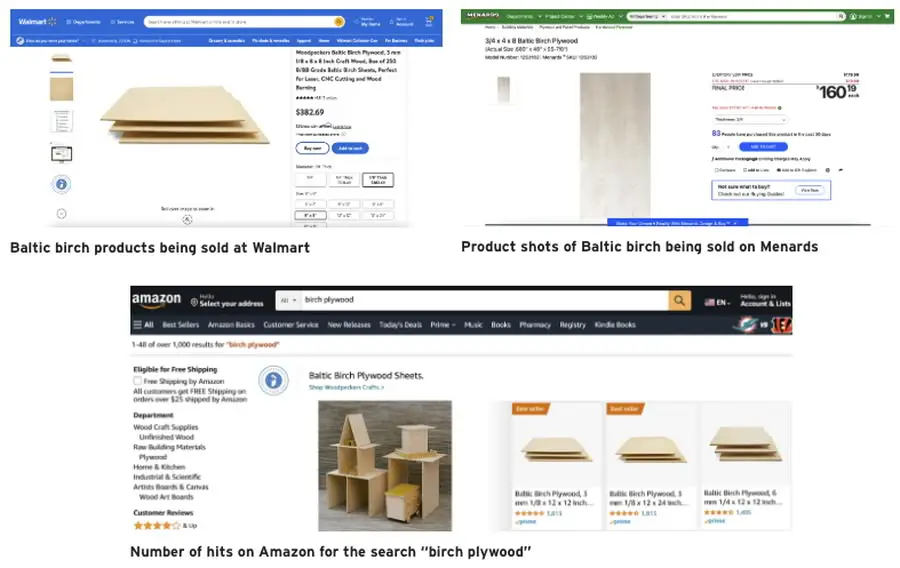
American consumers buy a lot of Russian produced birch wood. People perceive it as having strong, long-lasting, and visually appealing qualities. Carpenters, furniture makers, and manufacturers in the United States has used Russian birch as one of their favorite wood raw materials. Every year, hundreds of thousands of cubic meters of birch plywood come from Russia into the United States of America markets. Some gets made into products, and some is sold directly to customers at stores like Amazon, Home Depot, and Walmart.
The use of Russian products was not an issue until Russia invaded Ukraine in February 2022. The United States & many other countries have taken measures to stop buying goods from Russia, including birch wood. The sanction aims at stopping trade from going into financing the Russia-Ukraine war. However, was this measure effective?
The Environmental Investigation Agency checked the birch supply chain from May to August 2022. They found that the answer is no. The United States is not checking imports carefully enough. This means Russian birch wood is still coming into America without anyone stopping it. **Stopping conflict wood** After the invasion started, major wood certification groups said all Russian timber was “conflict timber” and stopped approving it. The European Union went further and banned all timber from Russia.
The United States raised the tax on Russian birch plywood from zero to 50%. This tax worked a little. Direct birch plywood from Russia dropped 40% between March & April. But Americans found another way to get Russian birch.
Indirect Sourcing of Russian Birch Wood
In 2020, the United States imported over $160 million worth of birch plywood from Russia. But Americans also buy birch plywood from Vietnam & Indonesia. In 2020, the United States imported over $205 million worth of birch plywood from Vietnam. However, most of this birch actually comes from Russia first. In March and April 2022, birch plywood imports from Vietnam jumped by more than 200%.
This happened because the tax only applied to Russian birch. Birch wood from Vietnam, on the other hand, had no tax. The supply chain is so complicated that nobody notices the birch is really from Russia.
The long journey: Russia to China to Vietnam to America
Most Americans who buy birch plywood at Amazon or Home Depot do not know where it really comes from. According to the investigation, most of the birch in these products started in Russia.
It traveled through China and Vietnam before reaching the United States. Almost no birch grows in Vietnam because birch needs cold weather. Russia has one-fifth of the world’s forests and grows the most birch in the world. China buys and sells more timber than any other country. Russian birch wood travels by train to China, then to Vietnam and finally to USA.
How Russian Birch Wood Travels Through China to the USA
China buys a lot of Russian wood, especially birch. In 2021, China imported 1.7 million cubic meters of logs from Russia. One out of every four logs was birch. China does grow some birch in its northeastern forests, but the government has strict rules against cutting down trees in these forests. Chinese birch is also lower quality than Russian birch. Because of this, China cannot sell its own birch competitively except in a few local areas.
How Plywood Gets Made
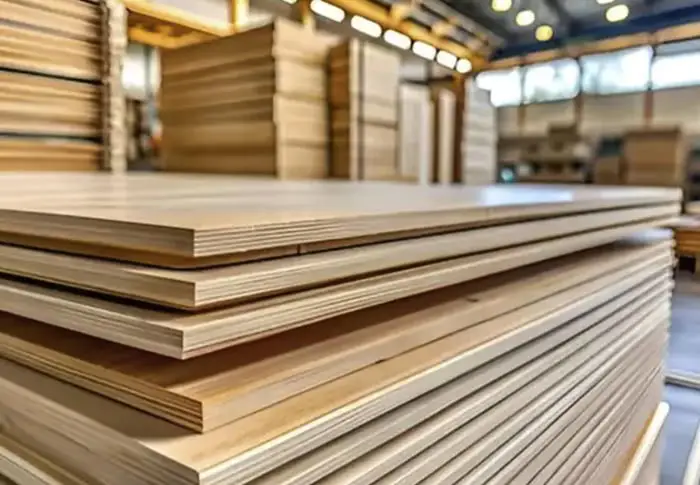
Making plywood involves several steps: peeling logs into thin sheets, gluing sheets together, & adding a nice outer layer. Different factories in different countries can do these steps. They don’t all have to work in the same place. China’s Plywood Business Over the past 20 years, China has become the world’s biggest maker of wood panels & plywood. The U.S. used to buy more than half its plywood from China. However, in 2017, the U.S. government added extra taxes on Chinese plywood to make it more expensive. This made American companies buy less from China. By 2020, only 12% of U.S. plywood came from China.
Instead, companies started buying from Vietnam and Indonesia. The Hidden Route, from China to Vietnam to America. Many Chinese factory owners found a way around these tariffs. They moved to Vietnam or sent partially finished plywood to Vietnam. Vietnam then finished the plywood & sold it to USA. Vietnam now imports mostly pre-peeled birch sheets (called veneers) rather than whole logs. In 2021, Vietnam bought $63 million worth of birch veneers—90% came from China.
Vietnam buys very few birch logs from Russia. Between 2015 and 2020, Chinese exports of veneers to Vietnam increased by 360%, and plywood exports increased by 100%.
Vietnam’s Growing Role
Vietnam has become Asia’s second-largest wood manufacturing center after China. In 2019, Vietnam supplied 31% of all American wood product imports. In 2021, Vietnam exported $8.7 billion worth of wood products to America—22% more than the year before. The Real Origin: Russia, Not China. Investigators spoke with managers at the five biggest Chinese birch veneer exporters.
These companies represent more than half of all birch plywood that Vietnam imports. The managers revealed an important secret: more than 90% of the birch comes from Russia. Here’s how it works: Russian birch logs arrive in China. Chinese factories peel them into veneers. Then China repackages and ships these veneers to Vietnam.
Vietnam finishes the plywood and sends it to America. When the product leaves China for Vietnam, the paperwork says it came from China, not Russia. One factory manager explained: “The country of origin will show it’s from China, not Russia.” Another manager was even more direct: “It’s all Russian birch… Everyone is following the same practice.
If you export from China, the ‘country of origin’ will show it’s from China, not Russia. “The system works because no one traces where the raw materials originally came from. The birch is Russian, but by the time it reaches American stores, the paperwork says it’s Chinese—and then Vietnamese.
How Russian Birch Wood Wash its Originality?
A Chinese Company Moves to Vietnam to Sell Wood to America A big Chinese wood company called Junma Group found a way to sell more plywood to the United States. In 2018 the company opened a factory in Vietnam and named it Junma Phu Tho. By moving to Vietnam, the company could sell wood to America without facing trade penalties. Junma Group now sends a lot of birch wood to Vietnam, and Junma Phu Tho has become one of Vietnam’s biggest wood exporters to the U.S.
This setup makes it hard for American buyers to know where the wood actually comes from. American Companies Don’t Know Where Their Wood Originates. Junma Phu Tho sells wood to several American companies. When investigators asked these companies where their birch plywood comes from, the answers were unclear. One company said the wood comes from “many different areas,” including Vietnam, Russia, and Thailand, and they call it “Baltic birch” because of its quality, not because it actually comes from the Baltic region. The company admitted that “Baltic birch” is just a loose term that doesn’t tell you the real source. Americans Should Know If They’re Buying Russian Wood Hidden supply chains allow traders to hide where wood comes from.
This matters because some wood may be cut illegally, damage forests, avoid taxes, or come from Russia – a country currently at war. Research shows that Russian timber sales help fund Russia’s invasion of Ukraine. American shoppers deserve to know the true origin of products they buy. U.S. law requires importers to report where wood is harvested, but this law is not being enforced properly.
“Baltic birch“ a commercial name that trumps origin and traceability
One prominent example of a Chinese plywood supplier trading to the U.S. via Vietnam is Junma Group (骏马集团). This large Chinese company had previously exported hardwood plywood to the U.S. The owner acquired several factories and, in 2018, registered a business under the name Junma Phu Tho in Vietnam where the company could reach more foreign markets and would have “no need to worry about anti-dumping issues” [Chinese WeChat account]. Junma Group is now among the top Chinese exporters of birch veneer to Vietnam (through its subsidiary, Guigang Junma); and Junma Phu Tho happens to be one of Vietnam’s largest plywood exporters to the U.S. One of Junma’s executives explained to EIA investigators how the manufacturing process in Vietnam obscured the origin of the timber from the U.S. consumers.
EIA’s investigation shows that Junma Phu Tho has been supplying a few U.S. companies, including Good Forest International, Far East American, Richmond International, Hardwood Specialty, etc. EIA investigators reached out to a few of these companies to understand whether they are aware of the sources of the birch plywood that they have been importing from Vietnam. Here are the types of answers that our investigators obtained:
EIA: So the birch is from which country then?
Employee at Hardwood Specialty: We get it from many different areas. They are all imported. Vietnam could be a main one, Russia is gonna be another one, Thailand I believe is another source. So it’s within that Baltic area.
EIA: But Vietnam is not in the Baltic…
Employee at Hardwood Specialty: I know but it is still classified like that…It’s gonna be the grade, not necessarily where it is sourced from.
EIA: So “Baltic birch” means the quality; it does not mean it’s necessarily from the Baltic countries?
Employee at Hardwood Specialty: Yeah, exactly, it’s kind of a loose term.
Conclusion
U.S. consumers want to know and deserve to know the origins of the products they are buying, and many have been asking for just that information. Meanwhile, the 2008 amendments to the U.S. Lacey Act are designed to shed light on the “black box” through increased due care and the declaration process, which requires importers to list the species and country of harvest. It would appear that the U.S. is not actively enforcing the Lacey Act.